ApolloChain - Platform for energy trading based on a smart platform
Blockchain is a digital register where transactions made in cryptocurrency can be recorded chronologically and publicly. Blockchain has been widely studied for its energy applications. It provides innovative solutions for data interaction, information security and creates the possible implementation of these technologies in the energy trading platform. Blockchain is perfect for facilitating the trap of peer-to-peer energy in a decentralized market.
Blockchain provides reliable identification capabilities for every electrical transaction, reduces credit costs, enables quick automatic settlement between delegated parties, dramatically reduces transaction costs, and effectively increases efficiency.
The Business White Book (hereinafter referred to as "paper") provides an overview of the economic characteristics of the strengths of some of the world's major markets; therefore, this article describes Apollochain's core business, its future development and its technological base; and finally, this document reveals the current operational structure and management model of the Appollochain project.
While in the solar energy proposal, according to KPMG research, the increase in new capacity of photovoltaic plants will increase by 330%,
from 111.68 GW in 2012 to 3695.64 GW in 2040:
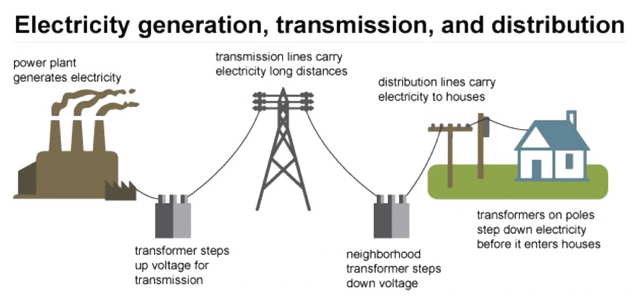
Managed and managed by a centralized transaction agency is the most common practice of energy trading today. In addition to maintaining its dynamic balance, a large number of third-party agencies (insurance, loans, leasing, ratings, etc.) engage in energy trading systems to ensure transaction security. The process and creation of these billed transactions, in terms of cost and security, involve huge maintenance costs, high third-party costs, and are extremely vulnerable to data loss and default interruptions.
New Apollochain energy trading platform
As an innovative tool, blockchain technology intrinsically matches the energy distributed in the regulated energy market. Following the reform of advanced forces and an increasingly open retail market, distributed production, as a rapidly growing industry, means that app users have both generators and consumer identities with a strong involvement in the industry reform.
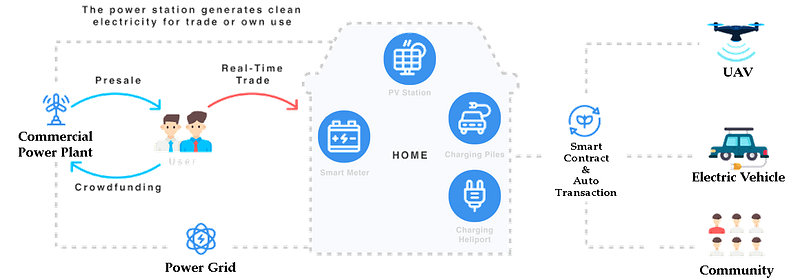
The image shows the basic structure of the Apollochain trading platform that contains the transactional level, the extended levels and the blockchain levels. Renewable energy systems are the principle of the level of transactions, while commercial parties contain electricity, electricity grids, distributed power plants, "smart homes" (domestic users and generators of energy), and other holders of renewable energy. Each part starts and ends its energy transactions at that level, and then all associated data is sent to an additional level that forms a smart contract and is ultimately stored in the block chain level.
Apollochain mainly implements Blockchain 3.0 technology to set up its trading platform. Targeting all regulated and retail-oriented energy markets around the world, Apollochain can gain a foothold in these countries and regions through existing connections and resources to build key users, generators, wholesalers, consumers and consumers. institutional or individual electricity. transactions between the parties, weaken centralized trading costs and avoid losses at government prices. In this case, the intelligent network with IoT (Internet of Things), AI (Artificial Intelligence) and Blockchain technology becomes the critical physical base to achieve all the above objectives (together "The Energy Internet").
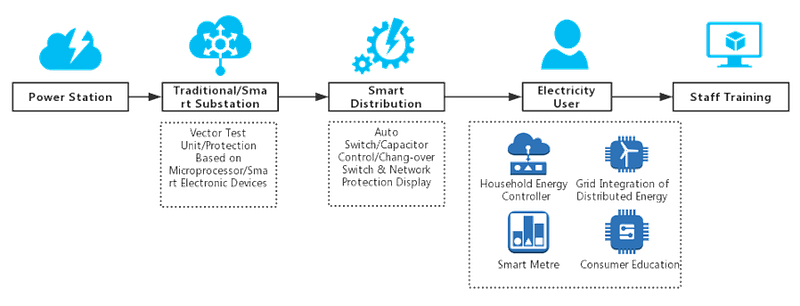
Smart grids enable demand management and can engage in the core network or networks to create micro-grids by connecting geographically close to each other end-users. In addition, another important device in smart grids is the Smart Power Meter (also known as the Smart Meter). Different installations are needed to obtain the user's energy consumption data and his consumption / production behavior. Based on this data, smart grids, electricity notification costs, real-time prices, electricity pruning systems, etc., can reduce programming costs and ask the electricity consumer to use if more rational electricity.
FOR MORE INFORMATION VISIT THE LINK BELOW:
Twitter: https: // twitter.
Facebook: https://www.facebook.com/apollochain
télégramme: https://t.me/apollochaingroup
site web: http: //www.apollochain.io
AUTHOR:Gambangcity
ETH:0xbd4e6B6E19c55D117badfa5C218Ae03263df6072


Tidak ada komentar:
Posting Komentar